

A baby’s first year is full of small changes that can feel surprisingly big. One week, they are quietly staring at faces. A little later, they are smiling, rolling, reaching, babbling, grabbing toes, and studying everything with wide, curious eyes. For parents, it can be beautiful to watch, but also a little worrying at times. Is the baby growing well? Are they learning enough? Should they be doing more by now?
The truth is that healthy development does not look exactly the same in every baby. Some babies are early movers. Some are more vocal. Some are calm observers before they suddenly begin doing several new things at once. Development has a natural range, and babies often grow in uneven bursts rather than neat, predictable steps.
Still, there are certain signs of healthy development in babies that can reassure parents. These signs appear across different areas: movement, communication, social connection, feeding, sleep, vision, hearing, curiosity, and emotional response. Looking at the whole baby is more useful than focusing on one single milestone.
Healthy Growth Is More Than Weight Gain
When people talk about a baby “growing well,” they often think first about weight. Weight gain is important, of course, especially in the early months. A baby who feeds well, gains weight steadily, and has enough wet diapers is usually showing good physical growth.
But development is broader than size. A healthy baby is not just getting heavier; they are becoming more alert, more responsive, and more connected to the world. They begin to notice voices, recognize faces, move with more control, and show preferences. Their body and brain are developing together.
Growth charts are helpful, but they do not tell the entire story. Some babies are naturally small, while others are bigger. What matters most is steady progress along their own growth pattern, along with energy, feeding ability, alertness, and interaction.
A Baby Responds to Faces and Voices
One of the earliest signs of healthy development in babies is their response to people. Even newborns are drawn to human faces and voices. At first, their reactions may be subtle. They may quiet down when they hear a familiar voice, turn slightly toward a sound, or look at a parent’s face during feeding.
As weeks pass, this connection becomes clearer. Babies may hold eye contact for longer, watch facial expressions, and respond to gentle talking. Around the early months, many babies begin to smile socially, not just as a reflex but in response to someone smiling or speaking to them.
This social response is important because babies learn through relationships. A baby who notices people, reacts to comfort, and becomes more engaged over time is showing healthy emotional and social development. These small exchanges are the foundation for communication, trust, and learning.
Movement Becomes More Controlled Over Time
Healthy physical development often shows through gradually improving movement. Newborns have jerky, uncontrolled motions because their nervous system is still immature. Their arms and legs may move suddenly, and their head needs support.
Over time, movement becomes smoother. A baby begins lifting their head during tummy time, turning toward sounds, kicking with more strength, and bringing hands toward the mouth. Later, they may roll, push up, sit with support, reach for toys, and eventually crawl or pull to stand.
Not every baby follows the same exact order. Some skip crawling. Some sit early but walk later. Some are cautious movers who take their time. The reassuring sign is progress. A baby who is gaining strength, using both sides of the body, becoming more coordinated, and trying new movements is usually developing well.
Tummy time plays an important role here. It helps strengthen the neck, shoulders, back, and core muscles. Even short, supervised sessions can support healthy movement when done regularly.
Hands Begin to Explore the World
A baby’s hands tell a story of development. In the newborn stage, hands are often closed in tiny fists. A baby may grasp a finger automatically, but they do not yet have much control.
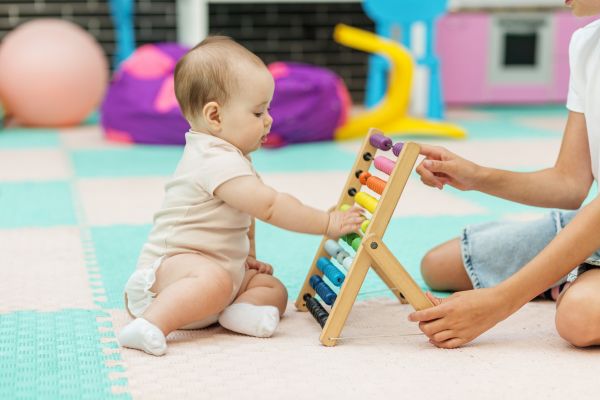
As development continues, hands begin opening more often. Babies start bringing their hands to their mouth, looking at their fingers, batting at toys, and reaching with purpose. Eventually, they grab objects, transfer toys from one hand to the other, bang things together, and pick up small pieces of food with improving control.
This progress shows growing hand-eye coordination. The baby sees something, reaches for it, touches it, and learns from the experience. These simple actions are part of early problem-solving. A baby is discovering texture, weight, shape, distance, and cause and effect.
Healthy development can often be seen in this curiosity. A baby who wants to touch, hold, shake, mouth, and explore safe objects is learning exactly as babies are meant to learn.
Feeding and Daily Routines Show Development Too
Feeding is not only about nutrition. It also reflects coordination, strength, sensory development, and comfort. In the early months, a baby who feeds regularly, seems satisfied after feeds, and produces wet diapers is usually showing healthy basic function.
As babies grow, they become more active participants in feeding. They may watch food, open their mouth for a spoon, reach for a cup, or try to hold soft finger foods. When solids are introduced at the appropriate age, babies gradually learn to move food in their mouth, swallow different textures, and participate in family mealtimes.
Some mess is normal. In fact, mess is part of learning. A baby touching food, smearing it, dropping it, and trying again is exploring with all senses. Parents often see only the cleanup, but the baby is practicing coordination, independence, and sensory confidence.
Daily routines also reveal development. A baby may begin to anticipate bath time, calm during a familiar song, or become excited when a caregiver prepares to feed them. These little patterns show memory and recognition.
Babbling, Sounds, and Early Communication
Before babies speak real words, they communicate in many ways. They cry, coo, squeal, laugh, grunt, babble, gesture, and use facial expressions. Healthy communication begins long before a first word.
In the early months, babies may make soft vowel sounds and respond to voices with movement or eye contact. Later, babbling becomes more varied. Sounds like “ba,” “ma,” and “da” may appear, even before they have clear meaning. Babies may also take turns with caregivers, making a sound and waiting for a response.
This back-and-forth pattern is a strong sign of healthy development. Communication is not only about vocabulary. It is also about connection. A baby who tries to get attention, responds to familiar voices, smiles during interaction, or makes sounds during play is learning the rhythm of conversation.
Parents can support this naturally by talking throughout the day, naming objects, singing simple songs, reading picture books, and responding warmly to sounds. Babies do not need formal lessons. They need real interaction.
Curiosity and Attention Grow Gradually
A healthy developing baby becomes more interested in the world with time. In the beginning, they may only focus briefly on faces, light, or movement. Later, their attention becomes stronger. They may watch a toy, study a parent’s mouth while they talk, turn toward a noise, or stare at their own hands as if they have just discovered something amazing.
Curiosity is one of the most beautiful signs of healthy development in babies. A baby may reach for a spoon, follow a rolling ball, look for a dropped toy, or turn pages in a board book. These actions show attention, memory, and early thinking.
Of course, attention in babies is short. They are not expected to focus like older children. Looking away, becoming fussy, or losing interest quickly can be normal. Babies need breaks. The important thing is that they show increasing interest, alertness, and engagement over time.
Emotional Responses Become Clearer
Babies have emotions from the beginning, but their emotional expressions become easier to read as they grow. A newborn cries to communicate discomfort, hunger, tiredness, or the need for closeness. Over time, babies begin smiling, laughing, showing excitement, protesting, and seeking comfort more clearly.
A healthy baby usually responds to comfort. They may calm when held, soothed, rocked, fed, or spoken to gently. They may show happiness when a familiar person appears and become upset when tired or overstimulated. Later, some babies show stranger awareness or separation anxiety, which can be a normal part of emotional development.
These emotional changes show that the baby is forming attachments and recognizing familiar people. A baby who reaches for a caregiver, relaxes in loving arms, or smiles during familiar routines is building trust.
Sleep Patterns Slowly Mature
Baby sleep can be unpredictable, and it is rarely as smooth as parents hope. Newborns sleep in short stretches because they need frequent feeding and comfort. Over time, many babies begin sleeping for longer periods, staying awake more during the day, and developing more predictable patterns.
Healthy sleep development does not mean a baby sleeps through the night early. Many healthy babies wake at night for months. What matters is that the baby is generally alert during awake times, feeds adequately, and has periods of rest that support growth.
Sleep also connects with development. As babies become more aware, they may resist sleep because the world is too interesting. They may wake during growth spurts, teething, illness, or new developmental stages. This can be tiring for parents, but it does not automatically mean something is wrong.
Vision and Hearing Support Learning
A baby’s eyes and ears help them connect with the world. Healthy visual development may show through looking at faces, following movement, noticing toys, reaching toward objects, and recognizing familiar people. Hearing development may show through startling at loud sounds, calming to a familiar voice, turning toward sounds, and later responding to their name.
Parents may notice that their baby watches their mouth during talking or turns toward a sibling’s voice. These responses are meaningful. They show that the baby is gathering information and learning patterns.
If a baby does not seem to respond to sound, does not track objects, has eyes that are often misaligned after the early months, or seems uninterested in faces, it is worth discussing with a pediatrician. Early checks can bring reassurance or help identify issues that need support.
Progress Matters More Than Perfection
It is easy for parents to become anxious when another baby reaches a milestone earlier. One baby may roll at four months, another at six months. One may babble constantly, while another is quieter but very observant. These differences can still fall within healthy development.
The most important question is whether the baby is progressing. Are they becoming more alert? Are movements getting stronger? Are they interacting more? Are they learning new sounds, expressions, gestures, or skills? Healthy development often looks like gradual forward movement, even if the pace is not perfectly even.
There may be pauses too. A baby might focus on learning to sit and seem less interested in babbling for a while. Then language may suddenly pick up. Development is connected, but it does not always move in a straight line.
When to Ask for Guidance
Parents should never feel embarrassed about asking questions. If something feels unusual, it is better to bring it up early. A pediatrician can check growth, movement, hearing, vision, feeding, and overall development.
It is especially important to seek advice if a baby loses skills they once had, seems very floppy or very stiff, does not respond to sound, does not make eye contact, does not show interest in people, has feeding difficulties, or is not making steady progress over time.
Early support can be very helpful. Sometimes the answer is simple reassurance. Other times, a baby may benefit from speech therapy, physical therapy, occupational therapy, hearing checks, vision care, or developmental screening. Getting help is not a sign of failure. It is a way of giving the child the best support possible.
Conclusion
The signs of healthy development in babies are found in everyday moments: a baby turning toward a voice, smiling at a familiar face, lifting their head, reaching for a toy, babbling during play, calming in loving arms, or studying the world with quiet curiosity. These small signs are not small at all. They show the body, brain, senses, and emotions growing together.
Every baby develops in their own way, and comparison often creates more worry than clarity. What matters most is steady progress, warm connection, and attention to the child’s overall pattern. Parents do not need to watch milestones with fear, but they should stay aware and ask for guidance when something feels off.
Healthy development is not a race toward the next skill. It is a gradual unfolding, shaped by care, safety, interaction, and time. In those ordinary daily moments, babies are learning more than we can see.